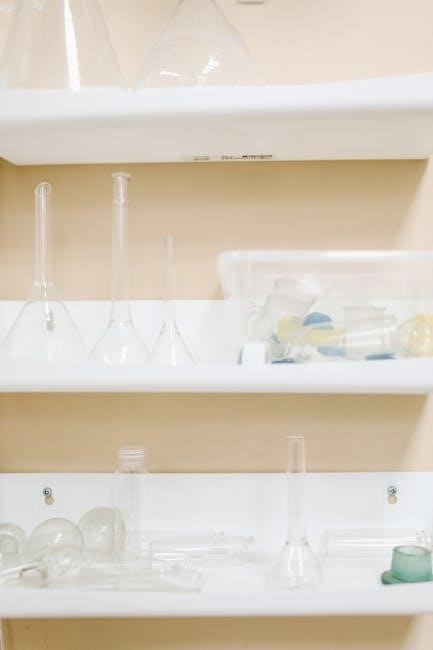
This manual details essential techniques, from microscale approaches to contemporary research methods, preparing students for successful organic chemistry experimentation and analysis.
What is Organic Chemistry Lab?
Organic Chemistry Lab is a practical course complementing theoretical knowledge, focusing on the synthesis, purification, and analysis of carbon-containing compounds; It’s where students apply principles learned in lecture, mastering techniques like distillation, recrystallization, and extraction. This lab isn’t merely following instructions; it’s about understanding why procedures work, troubleshooting issues, and developing critical thinking skills.
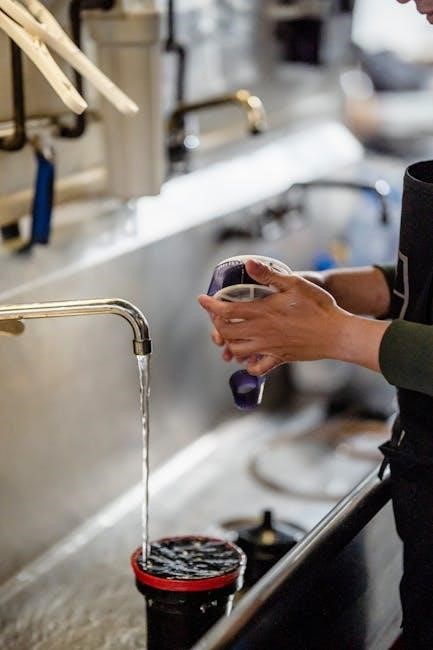
You’ll encounter diverse equipment – glassware, spectrometers – and learn to handle chemicals safely. The lab emphasizes accurate data recording and effective report writing, crucial for scientific communication. It’s a space for hands-on learning, building confidence, and preparing for future scientific endeavors. Expect challenges, but also rewarding discoveries!
Why is Lab Work Important?
Lab work bridges the gap between organic chemistry theory and real-world application, solidifying understanding through practical experience. It’s not enough to know reactions on paper; you must execute them, observe results, and analyze outcomes. This process cultivates problem-solving skills, essential for any scientific career.
Furthermore, lab work develops meticulousness and attention to detail – vital qualities for accurate experimentation and data interpretation. Mastering techniques like spectroscopy and chromatography builds a foundation for advanced studies and research. The lab fosters collaboration, communication, and the ability to critically evaluate scientific literature, preparing you for success beyond the classroom.

Essential Lab Equipment & Techniques
Mastering glassware, heating methods, and core techniques like distillation and chromatography is crucial for safe and effective organic chemistry experimentation.
Glassware: Types and Proper Usage
Understanding glassware is fundamental to organic chemistry. Beakers provide approximate volume measurements, ideal for holding and mixing liquids, but are not precise for accurate volumes. Flasks, particularly Erlenmeyer flasks, are suited for reactions and titrations due to their tapered shape allowing swirling without spillage.
Graduated cylinders offer more accurate volume measurements than beakers. Büchner funnels are essential for filtration, often used with vacuum filtration to expedite the separation of solids from liquids. Proper usage includes selecting the correct size glassware for the task and handling it with care to avoid breakage.
Always inspect glassware for cracks or chips before use, and understand the limitations of each piece to ensure accurate and safe experimentation.
Beakers, Flasks, and Graduated Cylinders
Beakers are versatile for stirring and heating, but imprecise for measurements; flasks, especially Erlenmeyer, excel in reactions with swirling, minimizing spills. Round-bottom flasks are ideal for refluxing and distillation setups. Graduated cylinders provide accurate volume readings, crucial for reagent preparation and quantitative transfers.
Choosing the right glassware depends on the task. Beakers are for approximate volumes, flasks for contained reactions, and cylinders for precision. Proper cleaning is vital – rinse thoroughly after each use.
Never heat glassware that is chipped or cracked. Understand volume markings and read at eye level for accurate measurements;
Büchner Funnels & Filtration Techniques
Büchner funnels, paired with flask and vacuum source, are essential for separating solids from liquids. Proper setup is key: ensure a tight seal with filter paper, using a rubber adapter. Wet the filter paper with solvent to create a seal.
Slowly pour the mixture, avoiding overfilling. Wash the solid with cold solvent to remove impurities. Maintaining consistent vacuum pressure is crucial for efficient filtration.
Troubleshooting includes checking for leaks, ensuring proper filter paper size, and addressing clogged funnels. Careful technique yields pure, dry solid products.
Heating & Cooling Methods
Effective temperature control is vital in organic chemistry. Hot plates offer even heating, ideal for refluxing and evaporating solvents, but avoid direct flame contact with flammable liquids. Bunsen burners provide rapid, localized heating, suitable for quick distillations, but require careful monitoring.
Cooling often involves ice baths – water/ice mixtures for 0°C, or salt/ice for lower temperatures. Dry ice/acetone baths achieve even colder conditions. Gradual temperature changes prevent bumping or unwanted reactions.
Always use appropriate glassware and stirring to ensure uniform heating or cooling.
Hot Plates vs. Bunsen Burners
Hot plates deliver consistent, controlled heating, minimizing the risk of localized overheating and making them excellent for extended reflux setups or gentle solvent evaporation. They are safer for flammable solvents as there’s no open flame. However, they heat slower than Bunsen burners.
Bunsen burners offer rapid, intense heat, ideal for quick distillations or when immediate temperature increases are needed. Precise flame adjustment is crucial, and they pose a higher fire risk.
Choosing depends on the reaction: controlled, gentle heating favors hot plates; rapid, high-temperature needs suit Bunsen burners.
Ice Baths & Cooling Techniques
Ice baths are fundamental for slowing down or stopping reactions, maintaining temperatures near 0°C. Prepare them with a 1:1 ice-water mixture for optimal cooling. Stirring ensures even temperature distribution, preventing localized warming. Salt addition lowers the freezing point, achieving colder temperatures if needed.
Dry ice-acetone baths provide significantly lower temperatures (-78°C), useful for highly exothermic reactions or reactions requiring very cold conditions. Handle dry ice with insulated gloves to avoid frostbite.
Effective cooling is vital for controlling reaction rates and maximizing product yield.
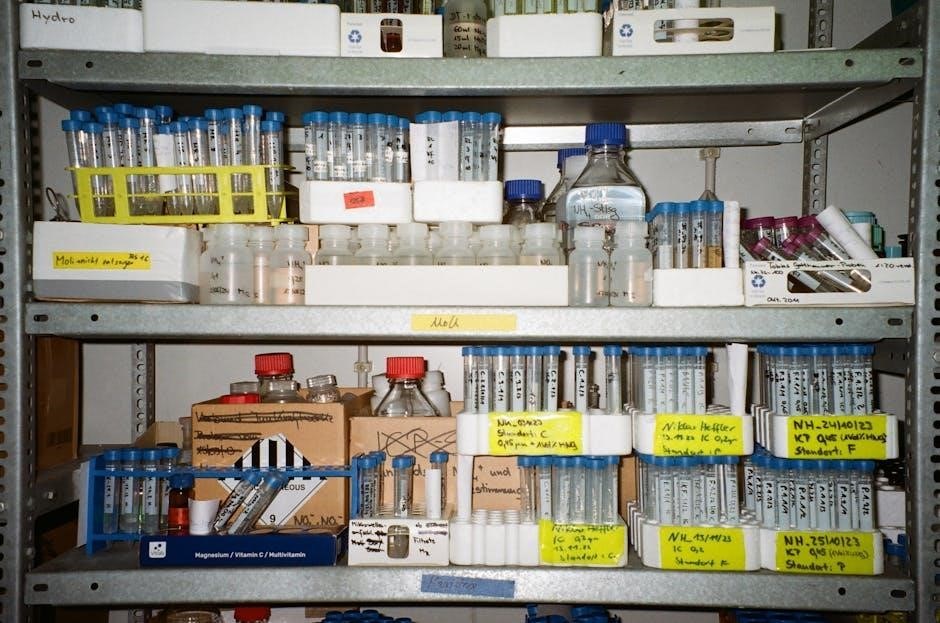
Key Organic Chemistry Reactions & Techniques
Mastering distillation, recrystallization, extraction, TLC, and rotovap techniques is crucial for purifying compounds and analyzing reaction outcomes effectively in the lab.
Distillation: Simple, Fractional, and Vacuum
Distillation is a cornerstone of organic chemistry, utilized for separating liquids based on boiling points. Simple distillation excels with liquids significantly differing in boiling points, while fractional distillation, employing a fractionating column, proves superior for closer separations.
Vacuum distillation lowers the boiling point, essential for heat-sensitive compounds preventing decomposition. Successful distillation requires careful heating control, proper apparatus setup, and vigilant monitoring of temperature. Understanding Raoult’s Law and azeotropes is vital for predicting and interpreting distillation results.
Proper technique minimizes bumping and ensures efficient separation. Careful consideration of these methods allows for effective purification and isolation of desired organic compounds.
Recrystallization: Principles and Procedure
Recrystallization is a crucial purification technique, leveraging solubility differences with temperature. A crude solid is dissolved in a hot solvent, then slowly cooled, inducing crystal formation of the desired compound. Impurities remain dissolved.
Solvent selection is paramount – ideal solvents dissolve the compound when hot but not when cold. Techniques like hot filtration remove insoluble impurities. Slow cooling promotes larger, purer crystals.
Proper crystal collection via vacuum filtration and subsequent drying yields a purified product. Understanding solubility curves and employing seeding can optimize crystal growth and purity.
Extraction: Liquid-Liquid Extraction Explained
Liquid-liquid extraction separates compounds based on their differing solubilities in two immiscible liquids – typically aqueous and organic. This technique exploits partition coefficients, favoring a compound’s distribution into one phase.
A separatory funnel is key; layers separate based on density. Multiple extractions with smaller volumes are more efficient than a single large extraction, maximizing product recovery.
Emulsions can hinder separation; gentle swirling, salting, or filtration can resolve them. Proper drying agents remove residual water from the organic phase before further analysis or purification.
Thin Layer Chromatography (TLC)
Thin Layer Chromatography (TLC) is a rapid analytical technique used to assess reaction progress, identify compounds, and determine purity. It separates components based on their differing affinities for a stationary phase (typically silica gel) and a mobile phase (solvent).
Spotting involves applying a small sample to the TLC plate. Development occurs as the solvent ascends, carrying compounds at varying rates.
Visualization, often with UV light or staining, reveals separated spots. Rf values (distance traveled by compound/distance traveled by solvent) aid in identification and comparison.
Spotting, Developing, and Analyzing TLC Plates
Proper spotting is crucial: apply concentrated samples as small dots, avoiding overloading. Development requires a well-sealed chamber with solvent below the spotting line. Capillary action drives solvent ascent, separating compounds based on polarity.
Visualization techniques, like UV lamps or iodine staining, reveal spots. Accurate Rf value calculation (distance traveled by compound / distance traveled by solvent) is essential for identification.
Compare Rf values to known standards to tentatively identify compounds. Analyze spot intensity to estimate relative concentrations and assess reaction completion or purity.
Rotary Evaporation (Rotovap)
Rotary evaporation efficiently removes solvents under reduced pressure. A rotating flask increases surface area, accelerating evaporation. A vacuum pump lowers the boiling point, protecting heat-sensitive compounds.
Carefully select the appropriate water bath temperature – too high can decompose the product, too low slows evaporation. Monitor the vacuum level for optimal performance.
Proper bumping prevention is vital; use bumping stones or a controlled rotation speed. Collect the distillate in a receiving flask, ensuring a tight seal. This technique is essential for isolating products after reactions or extractions.
Safety First!
Prioritize lab rules, chemical handling, and proper waste disposal. Understanding hazards and employing protective measures are crucial for a safe laboratory experience.
Lab Safety Rules & Regulations
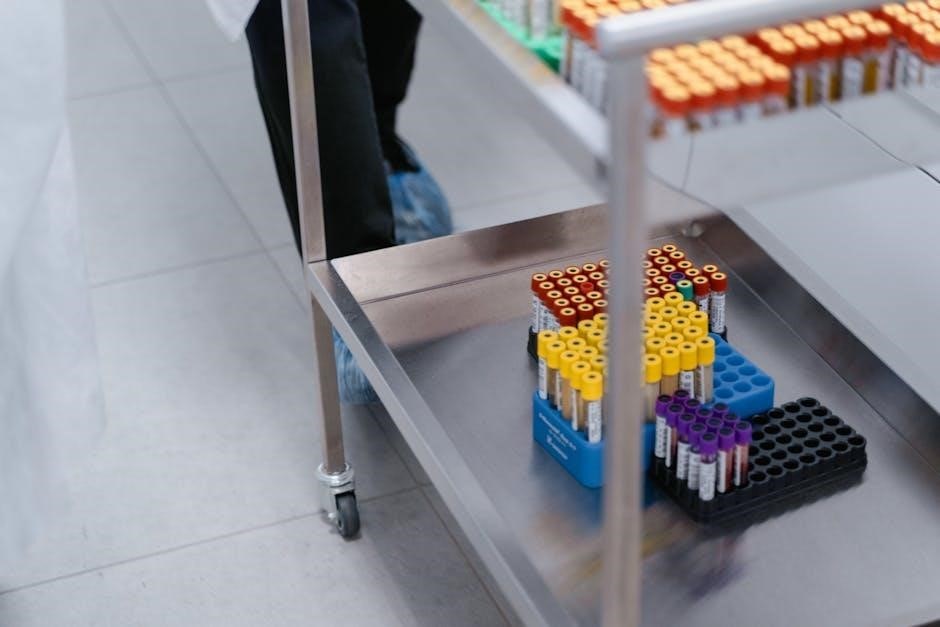
Organic chemistry labs demand strict adherence to safety protocols. Always wear approved eye protection – safety goggles are non-negotiable – and appropriate clothing, including lab coats and closed-toe shoes. Never work alone; a buddy system is essential. Familiarize yourself with the location of safety equipment like fire extinguishers, eyewash stations, and first aid kits.
Understand the potential hazards of each chemical before use, consulting Safety Data Sheets (SDS) when necessary. No food or drink is permitted in the lab. Proper ventilation is critical; use fume hoods when handling volatile or hazardous substances. Report any accidents, spills, or broken glassware to the instructor immediately.
Follow all disposal procedures meticulously. Unauthorized experiments are strictly prohibited. Maintaining a clean and organized workspace minimizes risks and promotes a safe learning environment for everyone.
Handling Chemicals Safely
Chemical safety is paramount in organic chemistry. Always assume all chemicals are hazardous. Carefully read labels and Safety Data Sheets (SDS) to understand specific risks and handling procedures. When diluting acids, always add acid to water, never the reverse, to avoid violent reactions.
Use appropriate personal protective equipment (PPE), including gloves, when handling chemicals. Avoid direct contact with skin and eyes. Work in a well-ventilated area, preferably a fume hood, when dealing with volatile or toxic substances.
Properly label all containers with the chemical name, concentration, and date. Store chemicals according to compatibility guidelines, separating acids from bases and oxidizers from flammables.
Acids, Bases, and Solvents
Acids and bases require careful handling due to their corrosive nature. Always wear appropriate PPE, including gloves and eye protection. Neutralize spills immediately with appropriate neutralizing agents – baking soda for acids, dilute acid for bases.
Solvents pose flammability and toxicity risks. Work in a well-ventilated area, away from open flames. Dispose of solvent waste properly in designated containers; never pour down the drain.
Understand solvent polarity and its impact on reactions and extractions. Common solvents like diethyl ether and hexane are highly flammable and require extra caution.
Waste Disposal Procedures
Proper waste disposal is crucial for safety and environmental responsibility. Never pour chemicals down the drain unless explicitly permitted by your instructor. Separate waste into designated containers: halogenated solvents, non-halogenated solvents, aqueous waste, and solid waste.
Clearly label all waste containers with their contents. Avoid mixing incompatible chemicals, as this can create hazardous reactions. Dispose of broken glass in designated sharps containers.
Follow your institution’s specific waste disposal guidelines meticulously. Understand the consequences of improper disposal, including environmental contamination and potential fines.
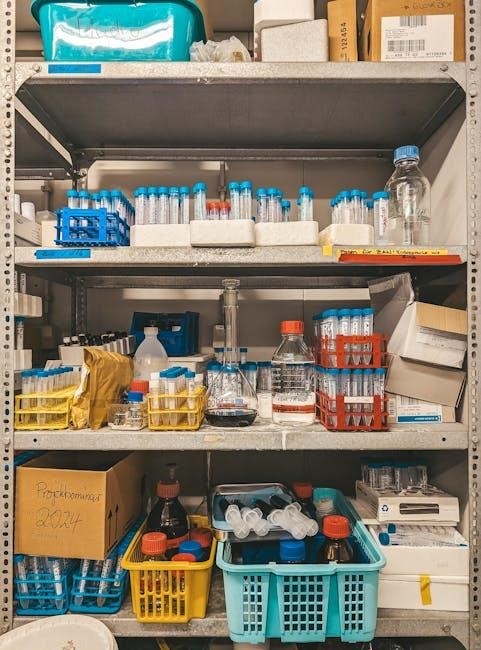
Spectroscopic Techniques
Utilizing IR and NMR spectroscopy, students will analyze compound structures, interpret spectral data, and confirm product identities through advanced analytical methods.
Infrared (IR) Spectroscopy: Basics
Infrared (IR) spectroscopy is a powerful technique used to identify functional groups within organic molecules. It works by irradiating a sample with infrared light and measuring the absorption of energy at specific frequencies. These frequencies correspond to the vibrational modes of the bonds within the molecule.
Different functional groups, such as alcohols, ketones, and amines, absorb IR radiation at characteristic frequencies, creating a unique “fingerprint” for each compound. Analyzing the IR spectrum allows chemists to determine the presence or absence of these functional groups, aiding in structure elucidation. Key regions of the IR spectrum include the stretching region (4000-1300 cm-1) and the bending region (1300-600 cm-1).
Understanding these regions and the characteristic peaks associated with various functional groups is crucial for successful spectral interpretation and compound identification in the organic chemistry lab.
Nuclear Magnetic Resonance (NMR) Spectroscopy: An Overview
Nuclear Magnetic Resonance (NMR) spectroscopy is an indispensable technique for determining the structure of organic molecules. It exploits the magnetic properties of atomic nuclei to provide detailed information about the connectivity and environment of atoms within a molecule. 1H NMR and 13C NMR are the most commonly used types in organic chemistry labs.
1H NMR reveals the number of hydrogen atoms, their chemical environment (chemical shift), and their interactions with neighboring protons (splitting patterns). 13C NMR provides information about the carbon skeleton of the molecule.
Analyzing NMR spectra requires understanding concepts like chemical shift, integration, and multiplicity, enabling accurate structural determination and confirmation.
Data Analysis & Lab Reports
Accurate data recording, coupled with well-structured reports—including results and discussions—are crucial for conveying experimental findings and demonstrating comprehension.
Recording Data Accurately
Meticulous data recording is the cornerstone of any successful organic chemistry experiment. Employ a dedicated lab notebook, documenting all observations, measurements, and calculations immediately.
Record data with appropriate units and significant figures, ensuring clarity and precision. Note any deviations from the experimental procedure, potential sources of error, and unexpected occurrences.
Avoid relying solely on memory; contemporaneous notes are invaluable. Utilize tables and charts for organized presentation.
Clearly label all data points and graphs. Proper documentation not only facilitates accurate analysis but also serves as a verifiable record of your work, essential for lab reports and future reference.
Writing Effective Lab Reports
A well-structured lab report communicates your experimental work effectively. Begin with a concise introduction outlining the experiment’s purpose and relevant theory. The methods section should detail the procedure, allowing replication.
Present results clearly using tables, graphs, and figures, accompanied by descriptive captions. The discussion section is crucial; interpret your findings, explain any discrepancies, and relate them to established principles.
Address potential sources of error and suggest improvements.
Conclude by summarizing key findings and their significance. Clarity, conciseness, and accuracy are paramount for a compelling and informative report.
Structure, Results, and Discussion Sections
The structure section details experimental setup and procedures, ensuring reproducibility. Results present data objectively – tables, graphs, and spectra are vital. Accuracy in recording observations is key.
The discussion section interprets these results, linking them to chemical principles. Explain observed trends, address errors, and compare findings with literature values.
A strong discussion demonstrates critical thinking and understanding.
Clearly articulate whether your results support or refute your initial hypothesis, and suggest future experiments.
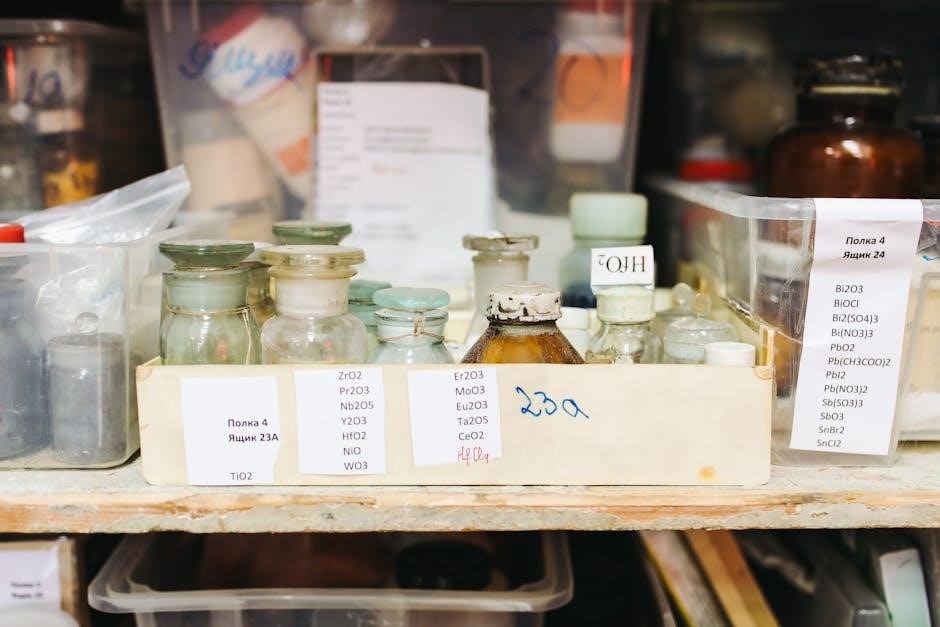
Troubleshooting Common Lab Problems
Addressing low yields and troublesome emulsions requires careful analysis of technique, reagent purity, and procedural adjustments for optimal experimental outcomes.
Low Yields: Identifying Potential Issues
Investigating low product yields demands a systematic approach. First, meticulously review the procedure for errors in technique or calculation. Loss of product during transfers or incomplete reactions are common culprits.
Next, assess reagent purity – degraded or improperly stored chemicals can significantly reduce yield. Ensure proper stoichiometry and complete mixing. Consider side reactions; unexpected byproducts consume reactants.
Filtration losses, especially with fine powders, contribute to diminished amounts. Finally, evaluate purification methods; excessive material lost during recrystallization or chromatography impacts overall yield. Careful documentation and analysis are crucial for pinpointing the source of the problem and optimizing the process.
Emulsions During Extraction
Emulsions, stubborn mixtures of immiscible liquids, frequently plague liquid-liquid extractions. Vigorous shaking can create them, while insufficient mixing hinders proper separation. Small amounts of finely dispersed droplets resist settling, obscuring the interface.
To break emulsions, gentle swirling often works better than forceful shaking. Adding a small amount of saturated sodium chloride solution increases ionic strength, promoting phase separation. Careful, slow addition is key.
Filtration through Celite can remove suspended solids stabilizing the emulsion. Allowing the mixture to stand undisturbed for an extended period may also facilitate separation. Avoiding vigorous mixing initially can prevent emulsion formation altogether.
Resources & Further Learning
Explore online resources and recommended lab manuals to deepen your understanding of organic chemistry techniques and enhance your laboratory skillset.
Online Resources for Organic Chemistry
Numerous online platforms offer supplementary materials for organic chemistry students. Websites like Chem LibreTexts provide comprehensive open-access textbooks and interactive learning modules, covering fundamental concepts and advanced techniques.
Khan Academy delivers free video tutorials and practice exercises, ideal for reinforcing core principles. MIT OpenCourseWare features lecture notes and problem sets from actual MIT courses, offering a rigorous academic experience.
For visual learners, YouTube channels dedicated to organic chemistry, such as The Organic Chemistry Tutor, present clear explanations and step-by-step demonstrations of reactions and mechanisms.
Additionally, many universities offer online resources, including virtual labs and practice quizzes, accessible to students worldwide, enhancing practical skills and theoretical knowledge.
Recommended Lab Manuals
For a comprehensive guide, “Techniques in Organic Chemistry” stands out as a detailed presentation of lab techniques, often considered the most complete and cost-effective resource for students. “The Students Lab Companion: Laboratory Techniques for Organic Chemistry” provides practical guidance and essential support throughout experiments.
“Organic Chemistry Lab Techniques: A Microscale Approach” is valuable for those utilizing smaller-scale experiments, emphasizing safety and efficiency. Consider supplementing with general chemistry lab manuals for foundational skills.
Witten, Frank, and Hall’s texts incorporate modern techniques alongside established methods, reflecting current research practices. Always check with your instructor for specific manual requirements, as course needs vary.